





Linear Burner Kits
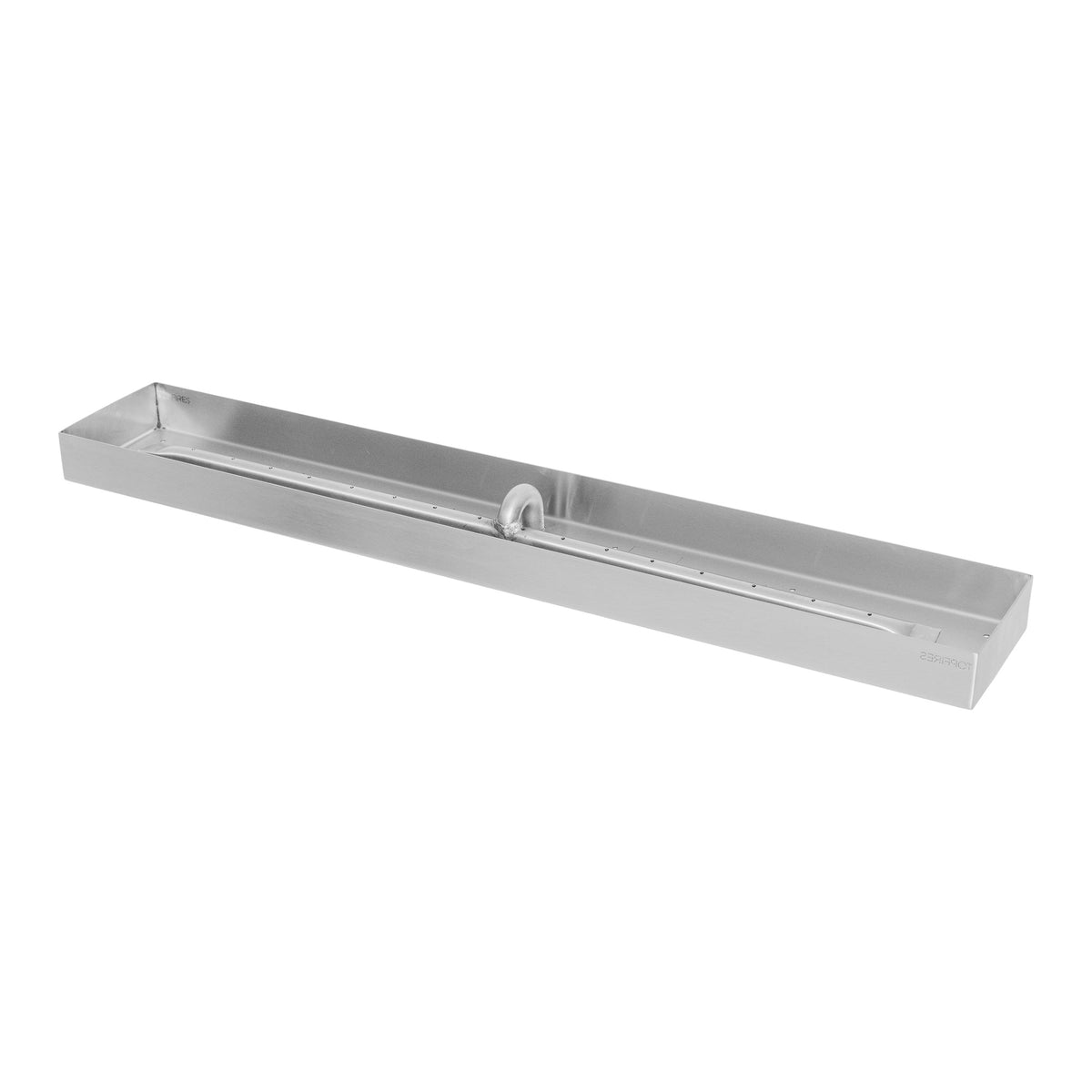
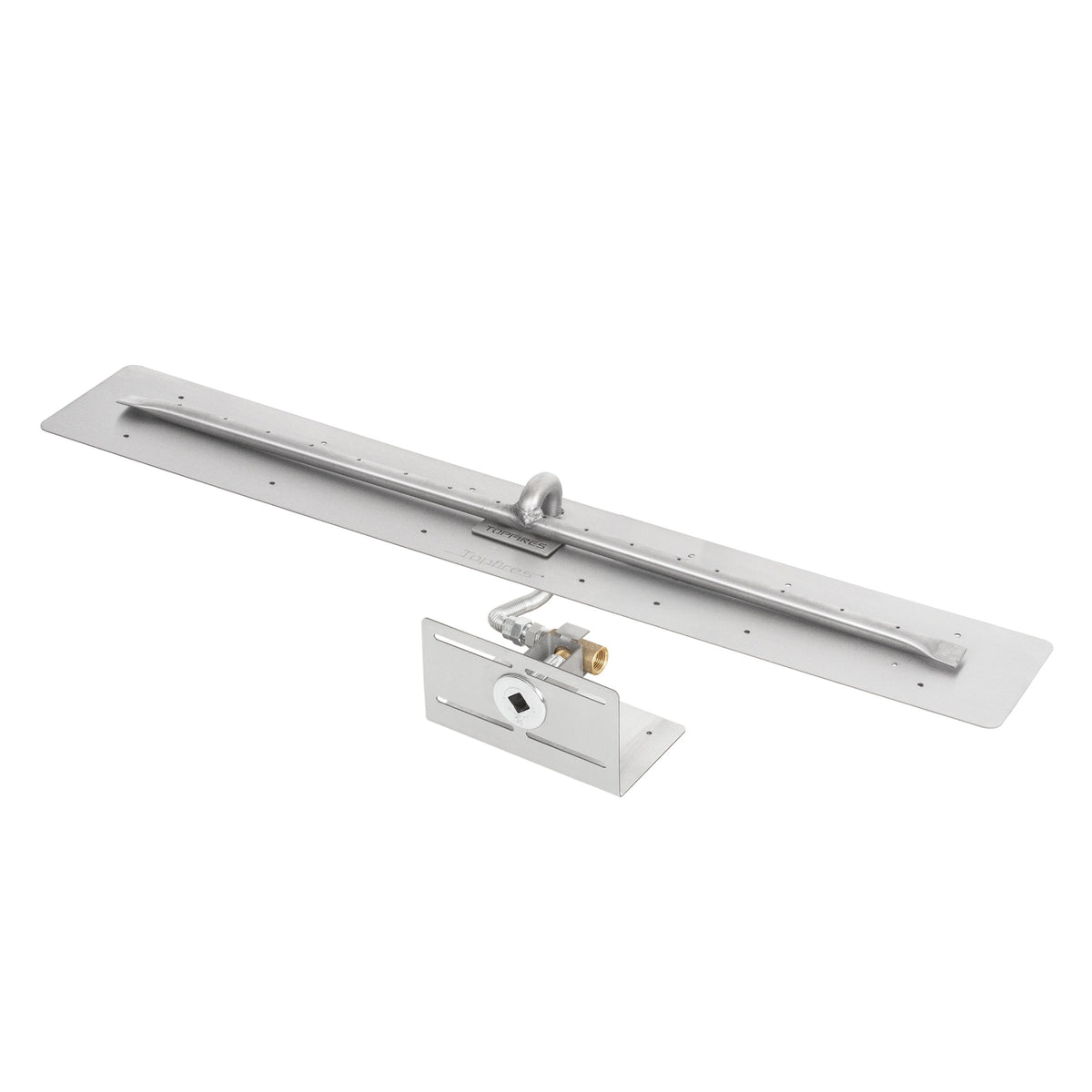
Linear pan and burner systems from The Outdoor Plus for a clean, continuous line of flame. Ideal for slim fire tables, seat walls, bench caps and modern architectural fire features where a single ribbon of fire is the look you want.
Why a Linear Burner Kit?
A linear burner produces one long, continuous ribbon of flame with a very small footprint. It fits along a seat wall, the cap of a bench, the edge of a pool or down the center of an outdoor dining table, where a round or wide rectangular burner would simply take up too much space. The look is clean and architectural, which is why linear fire features are so popular in contemporary outdoor design.
Burner Styles in This Collection
- Linear stainless steel burners – a straight run of flame in a 6" or 8" wide pan.
- Linear bullet burners – a straight run fitted with bullet-style jets for a distinct, defined flame, available in stainless steel or brass.
Sizing a Linear Kit
Linear kits come with 6" or 8" wide pans, from 24" up to 96" long. Measure the interior length and width of your fire feature and choose the pan that fits. The burner is sized shorter than the pan, for example a 60" burner in a 72" pan, to leave space at each end.
A narrow burner is the least forgiving shape when it comes to gas supply. There is no extra width to hide a pressure drop, so if the supply is too small, the flame will be strong near the inlet and thin out toward the far end. On longer runs, the gas line size matters even more.
Plan the Gas Supply First
The BTU rating tells you how much gas a burner needs to reach its full flame. The Rectangle Flat Pan & Linear Stainless Steel Burner Kit, for example, is rated at 30,000 BTU with an 18" burner and 140,000 BTU with an 84" burner; the longest sizes use a 3/4" inlet. Every product page lists the BTU rating and gas inlet size wherever The Outdoor Plus publishes them.
A burner can only perform as well as the gas line feeding it. Pipe diameter sets how much gas can reach the burner, a long run from the meter or tank reduces pressure, and every fitting and elbow adds restriction. An undersized line is the most common reason a burner never reaches its full flame height. Share the BTU rating with your gas professional so they can confirm the pipe size, regulator and supply before installation.
Flat Pan or Drop-in Pan?
The pan is the platform that holds the burner and the weight of your fire glass or lava rock, and it closes off the opening so leaves, debris and most of the rain stay out of the cavity below. The Outdoor Plus offers several pan styles:
- Flat pan – a flat pan with drain holes that rests on a support or ledge inside your enclosure. The most flexible choice for masonry and custom builds.
- Drop-in pan – sets into the opening of the fire feature for a clean, finished edge.
- Lipless drop-in pan – sits flush inside the fire feature for a frameless, minimal look.
- Raised lip drop-in pan – a drop-in pan with a raised edge that helps keep fire media in place.
Measure the actual interior opening of your fire pit, not the outside of the enclosure. Gas fittings and ignition components are attached below the pan, so check that there is room for them inside the cavity as well.
Choosing Your Ignition
How often you plan to use the fire pit, and how you want to light it, should guide your choice more than the price difference. Every kit is offered with up to five ignition systems:
- Match Lit – the simplest system, with no electrical requirement: open the key valve and light with a long lighter.
- Match Lit w/ Flame Sense – manually lit, with a thermocouple safety valve that shuts off the gas if the flame goes out.
- Flame Sense w/ Spark Ignition – push-button spark ignition with flame sensing, so no matches are needed.
- 30DC Electronic Ignition – low-voltage electronic ignition that can be operated from a wall switch, timer, pool controller or home automation system. The 30DC transformer is included with the kit.
- Plug & Play – electronic ignition with a 3-prong plug for a standard 110V outlet. The 110V transformer is included.
The flame sense options are generally offered on the smaller sizes, and each product page shows exactly which ignition systems are available for each size.
Because a linear fire feature is often built into a wall, bench or table, many customers pair it with 30DC Electronic Ignition or Plug & Play, so the fire can be turned on from a switch, timer or home automation system instead of by hand.
Natural Gas or Propane
Natural gas and liquid propane are not interchangeable. Propane is supplied at a different pressure and burns differently, so the gas components are set up for the fuel you choose when you order. Propane installations typically use an air mixer at the burner inlet to burn cleanly; without the right setup, propane can produce a lazy yellow flame and soot on the media. If you are not sure which setup your project needs, contact us before ordering.
Ventilation and Drainage
A fire pit enclosure needs ventilation so that gas cannot collect inside the cavity. Place vents on opposite sides of the enclosure so air can flow through. Propane is heavier than air and settles at the bottom, so propane installations need vents low on the enclosure; natural gas is lighter than air and rises, so vents belong near the top. Follow the vent requirements in The Outdoor Plus installation instructions and your local code.
Water is the other thing to plan for. Rain filters down through the fire glass or lava rock, so the pan's drain holes and the base of your enclosure need a path for water to escape. Standing water around the burner and gas components can cause corrosion and uneven lighting. Clearing media dust from the drain holes is a quick seasonal check.
A long, narrow enclosure can trap gas more easily than a wide, open one, so spread the vents along its length rather than placing them all at one end. A narrow pan also gives water fewer places to go, so make sure the drain holes and the base of the enclosure drain freely.
Finishing With Fire Glass or Lava Rock
Fire media hides the burner, spreads the gas for a natural-looking flame and gives the fire pit its finished appearance. Cover the burner evenly, following the depth in the installation instructions: too little media leaves the burner visible, while too much restricts the flame and can turn it yellow. Uneven depth is very visible on a narrow burner, so check it at several points along the run. Shop our fire glass and lava rock to finish your build. Fire media is sold separately.
Professional Installation
All gas fire features must be installed by a qualified, locally licensed gas professional, following The Outdoor Plus installation instructions and your local building codes. Keep the clearances to combustible materials listed in the instructions, and do not build a gas fire pit directly under an awning, pergola or other overhead structure.
Need Help Choosing?
A linear fire feature is usually chosen because the surrounding design calls for a clean, continuous line of fire, so the run length and ignition placement are the first decisions to make. Send us your interior opening dimensions, fuel type and gas line size, and we'll help you confirm the right size, burner and ignition before you order. Simply contact us.
Frequently Asked Questions
Should I choose a 6" or 8" wide linear pan?
Both carry the same style of linear burner. The width mostly depends on the interior width of your fire feature, so measure your opening and choose the pan that fits.
What is the difference between a linear burner and a linear bullet burner?
A standard linear burner releases gas through ports along a stainless steel tube for a smooth ribbon of flame. A linear bullet burner uses individual bullet-style jets for a more defined flame pattern.
Why does my linear burner light unevenly along its length?
Uneven flame along a long burner usually means the gas is losing pressure on its way to the far end. A larger supply line or higher-flow connectors typically solve it. Uneven media depth along the pan can also make the flame look uneven.
What is included in a burner kit?
Each kit includes the pan and burner together with the components for the ignition system you choose. The exact components vary by ignition type, and each product page lists what is included. Fire glass and lava rock are not included and are sold separately.
Do I need to buy a transformer separately?
No. Kits with 30DC Electronic Ignition include the 30DC transformer, and Plug & Play kits plug directly into a standard 110V outdoor outlet.
Can I convert my kit between natural gas and propane later?
Natural gas and liquid propane are not interchangeable, so order the fuel type that matches your gas supply. A conversion should only be done with parts approved by the manufacturer and by a licensed gas professional. Contact us if your plans may change.
How long does shipping take?
Shipping is free, and The Outdoor Plus burner kits typically ship in 10–14 business days.