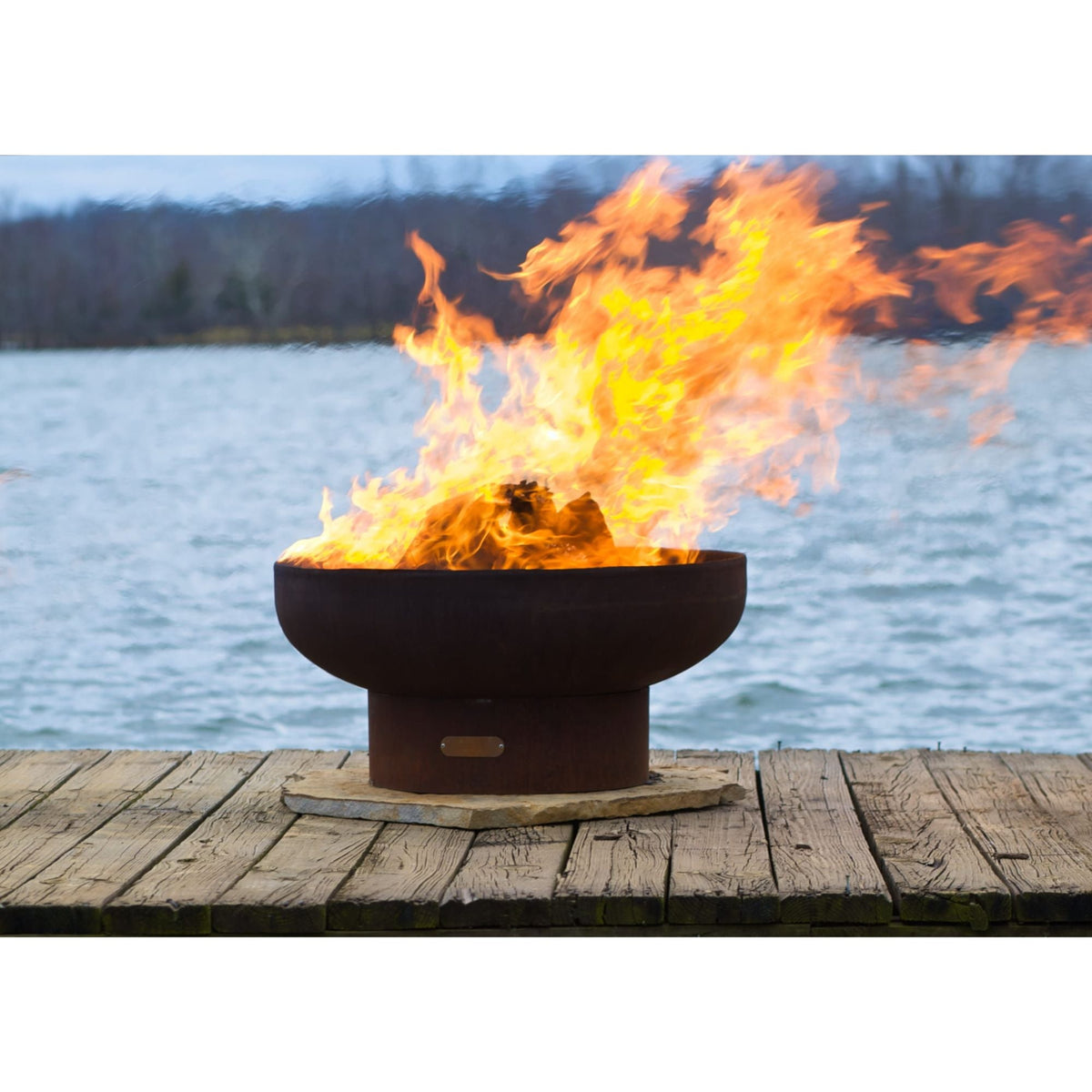
Article: Natural Gas vs. Propane Fire Pits: What's the Difference?

Natural Gas vs. Propane Fire Pits: What's the Difference?

Natural gas is best for permanent installations close to an existing gas line: it never runs out. Propane is best where there is no gas line, because it runs from a tank. The two are not interchangeable, so choose the fuel before you order.
Most gas fire pits, fire tables and fire bowls in our range are offered for either natural gas or liquid propane. The fire looks the same, but the installation and day-to-day use are different.
| Natural Gas | Propane (LP) | |
|---|---|---|
| Supply | Your home's gas line | A propane tank |
| Runs out? | No | Tank needs refilling or exchanging |
| Installation | Gas line run to the fire pit by a licensed professional | Tank connection; professional installation recommended |
| Placement | Fixed, near a gas line | More flexible, wherever the tank can be placed safely |
| Ventilation | Gas is lighter than air: vents near the top of the enclosure | Gas is heavier than air: vents low on the enclosure |
| Typical use | Permanent outdoor living spaces | Spaces without a gas line, or where flexibility matters |
In This Guide
Natural Gas

Permanent features around pools are often run on natural gas
Natural gas is piped from your home's supply, so the fire pit is always ready and you never have to think about refilling a tank. It's the natural choice for permanent features: a fire pit built into a patio, fire bowls lining a pool, or a fire table that stays in one place.
The trade-off is installation. A gas line has to be run to the fire pit by a qualified, locally licensed gas professional, and the line has to be sized for the burner's BTU rating. The further the fire pit is from the meter, and the larger the burner, the more important the line size becomes.
Propane

LuxCraft Lumin Fire Table 60 Round
Propane runs from a tank, so you can enjoy a gas fire where there is no gas line. It's popular for fire tables on terraces, rental homes and gardens where trenching a gas line isn't practical. Some fire pits and tables are designed to hide a standard propane tank inside the base; where The Outdoor Plus confirms this, it is listed as "Stores LP Tank in Base" in the product's specifications.
Propane burns differently from natural gas, so propane fire pits use components set up for propane. Propane installations typically use an air mixer at the burner to burn cleanly. You will need a propane tank, and the tank and regulator should be placed and connected according to the manufacturer's instructions.
Ventilation and Safety
Any enclosed gas fire pit needs ventilation so gas can't collect inside the cavity. Where the vents go depends on the fuel:
- Propane is heavier than air and settles at the bottom, so propane installations need vents low on the enclosure.
- Natural gas is lighter than air and rises, so vents belong near the top.
- Place vents on opposite sides so air can flow through, and follow the vent requirements in the installation instructions and your local code.
Good to know: Never use a propane fire pit indoors or in an enclosed space, and store spare propane tanks safely away from the fire.
Ordering the Right Version

The Outdoor Plus Coronado Stainless Steel Gas Fire Pit
On most of our gas products you choose the fuel type as an option before adding to cart. Natural gas and liquid propane versions are built with different components, so pick the one that matches your supply. If your plans might change, contact us before ordering: converting later should only be done with parts approved by the manufacturer and by a licensed gas professional.
Which Fuel Suits Your Setup?
| Your Situation | Usually the Better Fit | Why |
|---|---|---|
| Gas line already on the patio or near the pool | Natural gas | No tank to refill, always ready |
| Building a new outdoor kitchen or patio | Natural gas | The line can be planned in during construction |
| No gas line, or a long distance to the meter | Propane | Avoids trenching a long gas line |
| Rental home, terrace or a fire table you may move | Propane | More flexibility in placement |
| Several fire bowls around a pool | Natural gas | One supply can feed multiple features |
If you plan several fire features, such as fire bowls around a pool plus a fire pit, tell your gas professional the BTU rating of every burner. The gas line has to be sized for all of them running together.
Living With Your Gas Fire Pit
- Keep the burner and fire media clear of leaves and debris, and use a fire pit cover between uses.
- For propane, check the tank level before guests arrive, and keep a spare tank stored safely away from the fire.
- If the flame changes color, becomes sooty or lights unevenly, stop using it and have a gas professional check the setup.
- Have connections and components inspected periodically, as the manufacturer recommends.
Frequently Asked Questions
Is natural gas or propane cheaper to run?
It depends on local utility and propane prices. Natural gas is often cheaper where it's available, but check current rates in your area.
Can I switch from propane to natural gas later?
Only with a conversion approved by the manufacturer, installed by a licensed gas professional. It's simpler to order the right fuel type from the start.
Do you sell propane tanks?
No. You'll need to source a propane tank locally. Check the product's specifications to see whether the tank can be hidden in the base.
Does the flame look different on propane?
With the correct propane setup, the flame looks very similar. A lazy yellow flame or soot usually points to an incorrect setup, which a gas professional can check.
Final Thoughts
Choose natural gas for a permanent, always-ready fire, and propane for flexibility where there's no gas line. Either way, have the installation done by a licensed professional and you'll enjoy the same beautiful flame.