






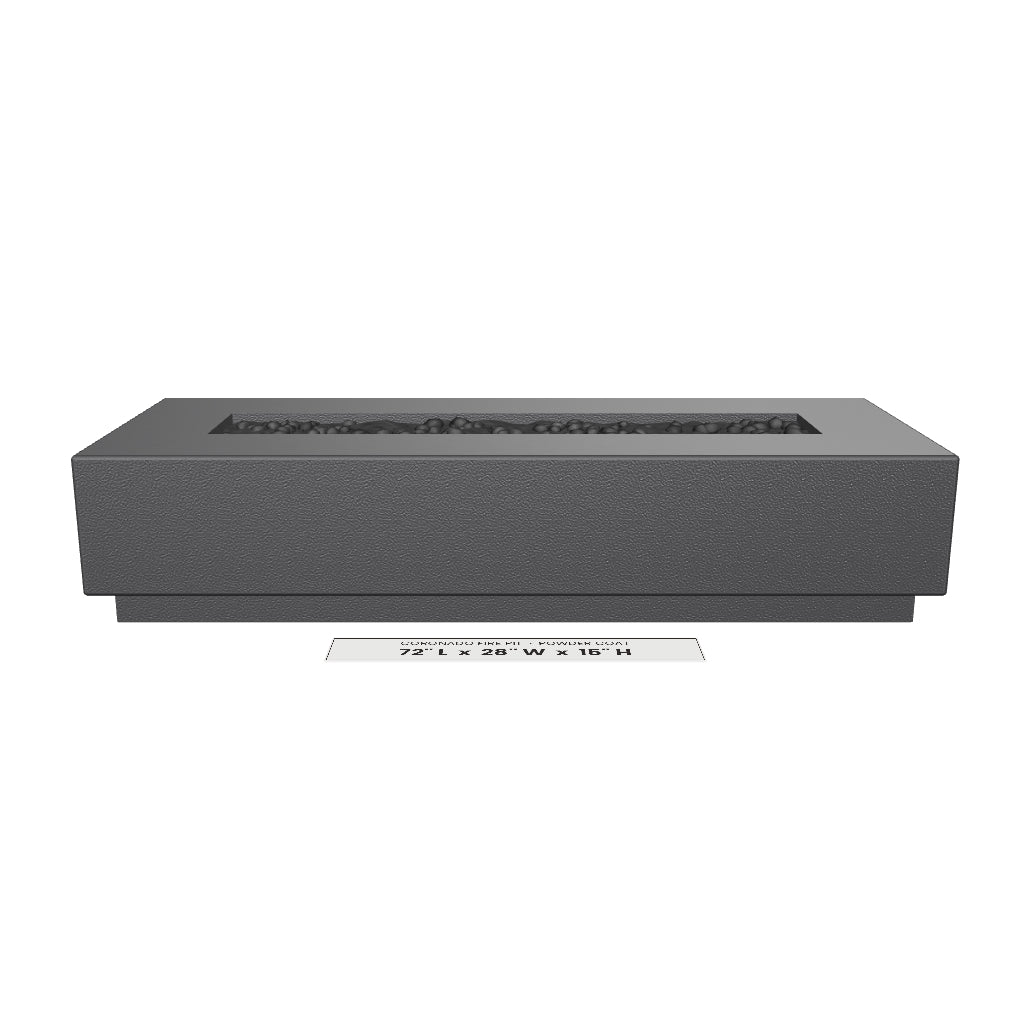

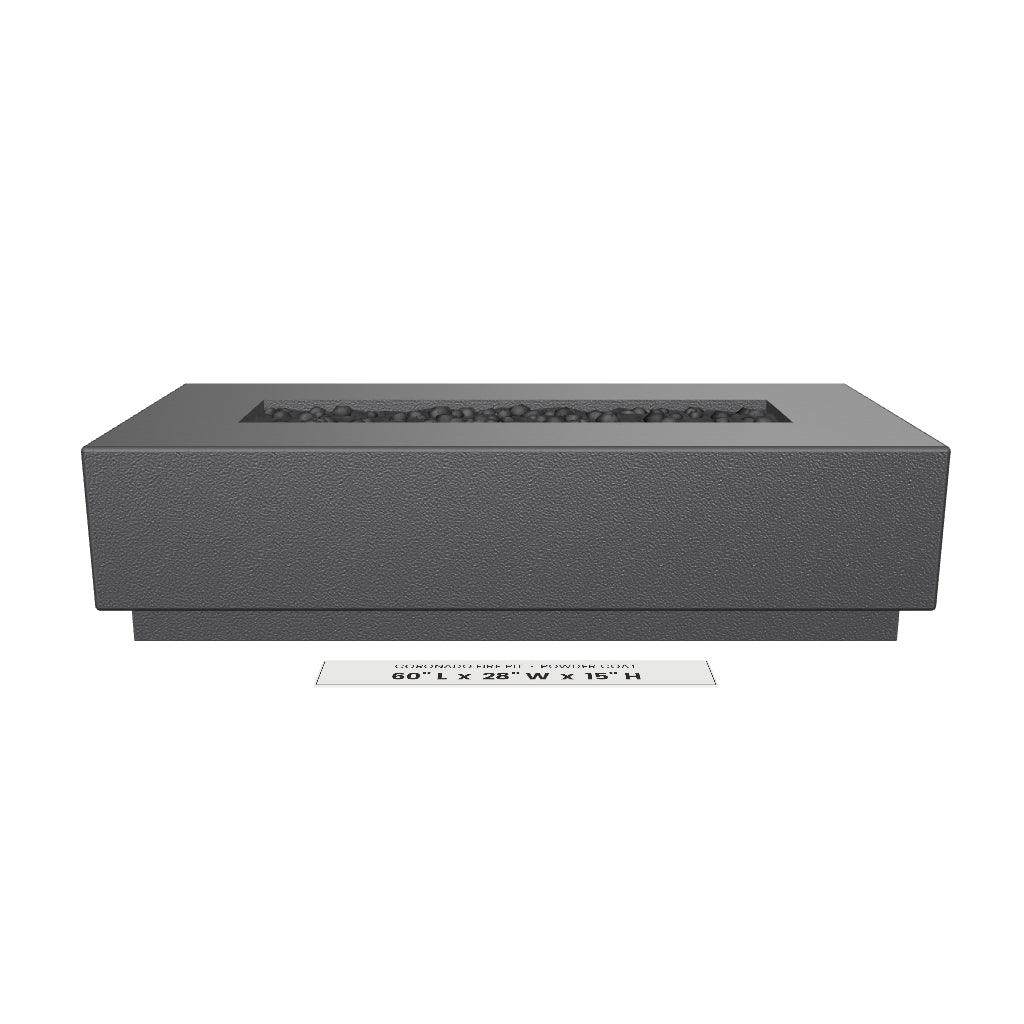

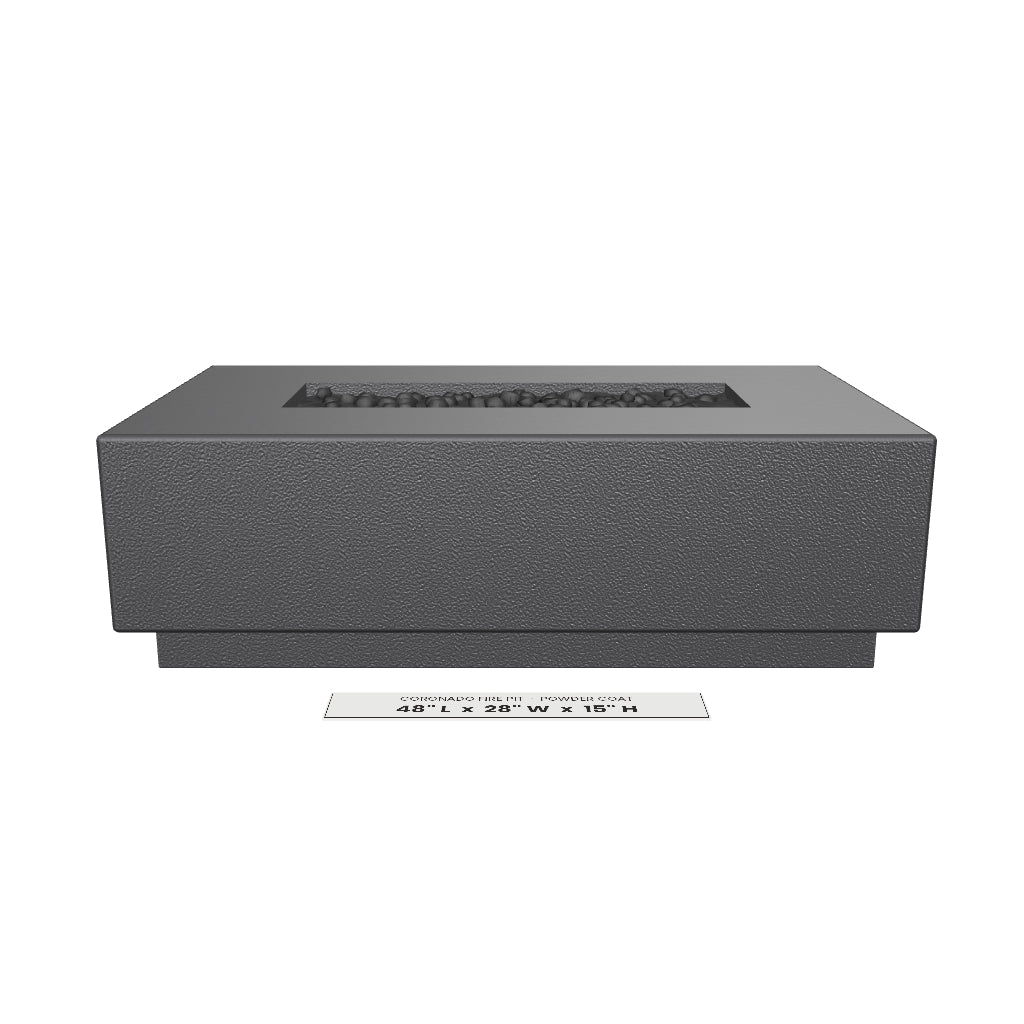


Rectangle & Linear Gas Fire Pits
Rectangle and linear gas fire pits from The Outdoor Plus, Fire Pit Art and LuxCraft. A long flame stretching across a rectangular fire pit makes a dramatic focal point for patios, poolsides, outdoor sofas and long seating areas. Browse handcrafted designs in powder coat, stainless steel, Corten steel, hammered copper, wood grain and concrete, offered for natural gas or liquid propane.
Why Choose a Rectangle or Linear Fire Pit?
A rectangular fire pit follows the shape of most outdoor furniture. Set it in front of a long sofa, between two facing benches or along the edge of a pool, and the flame runs the full length of the seating, so more people can sit close to the fire. Linear fire pits take this further with a long, narrow flame that reads as a ribbon of fire, a look that suits contemporary architecture and minimalist gardens.
Rectangular fire pits also work well as a divider or a backdrop. Placed along a terrace edge, in front of a wall or beside a pool, they frame the space without blocking views. Because the flame is spread over a longer burner, rectangular designs give a wide fire that is easy to enjoy from a row of seats.
Designs in This Collection
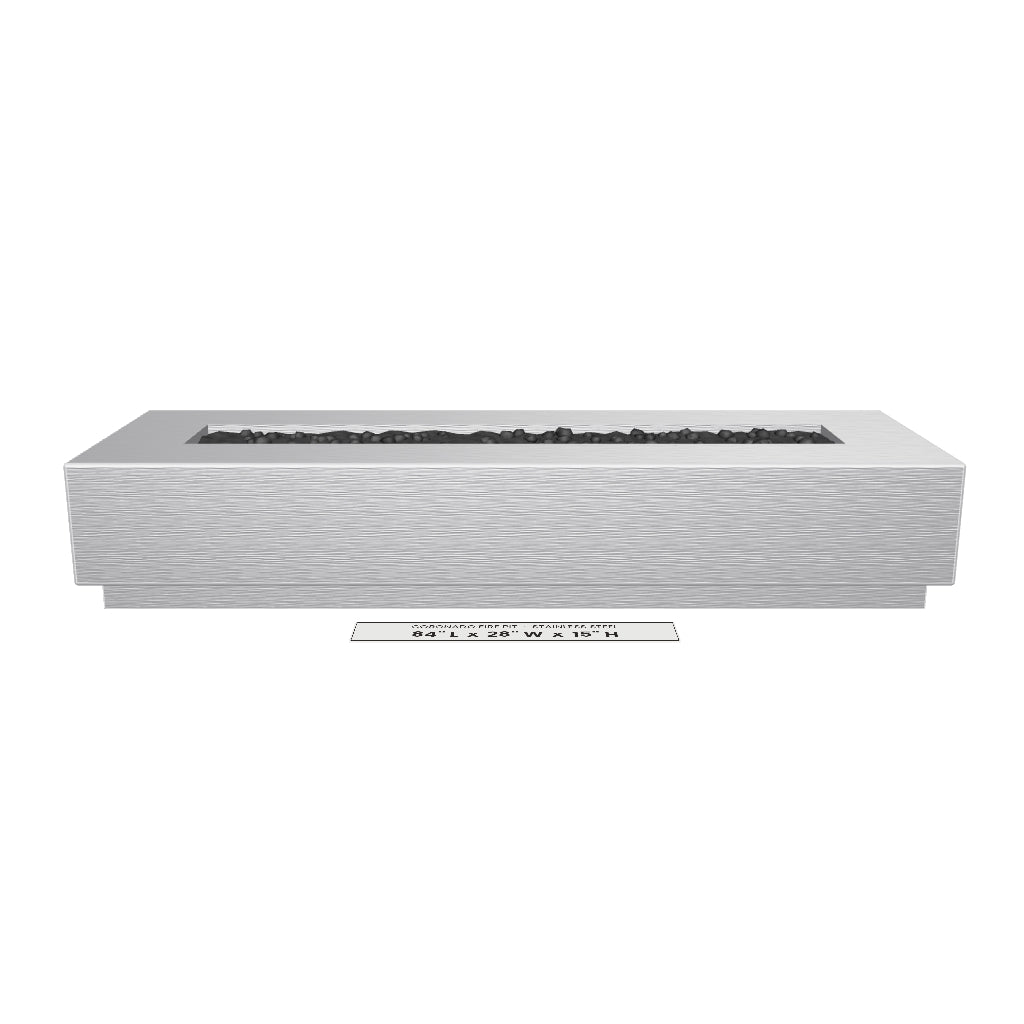
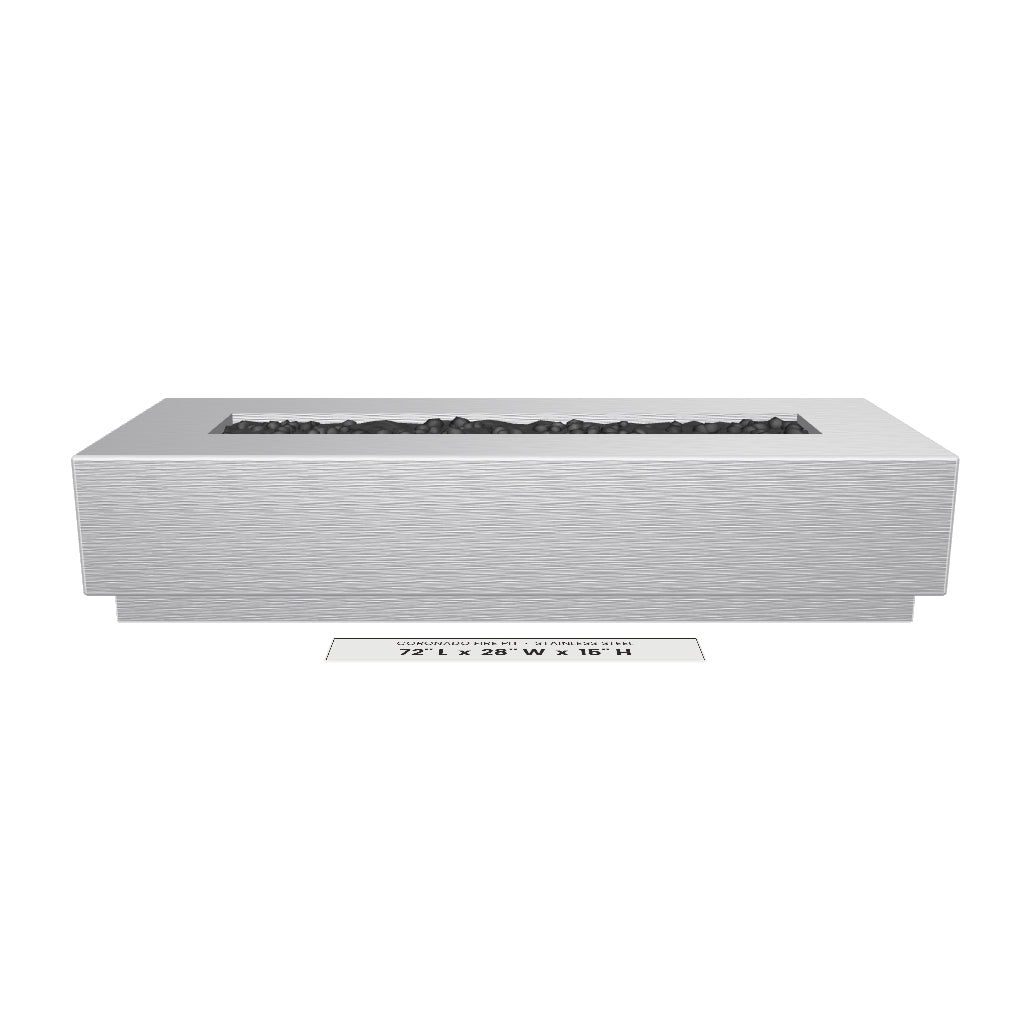
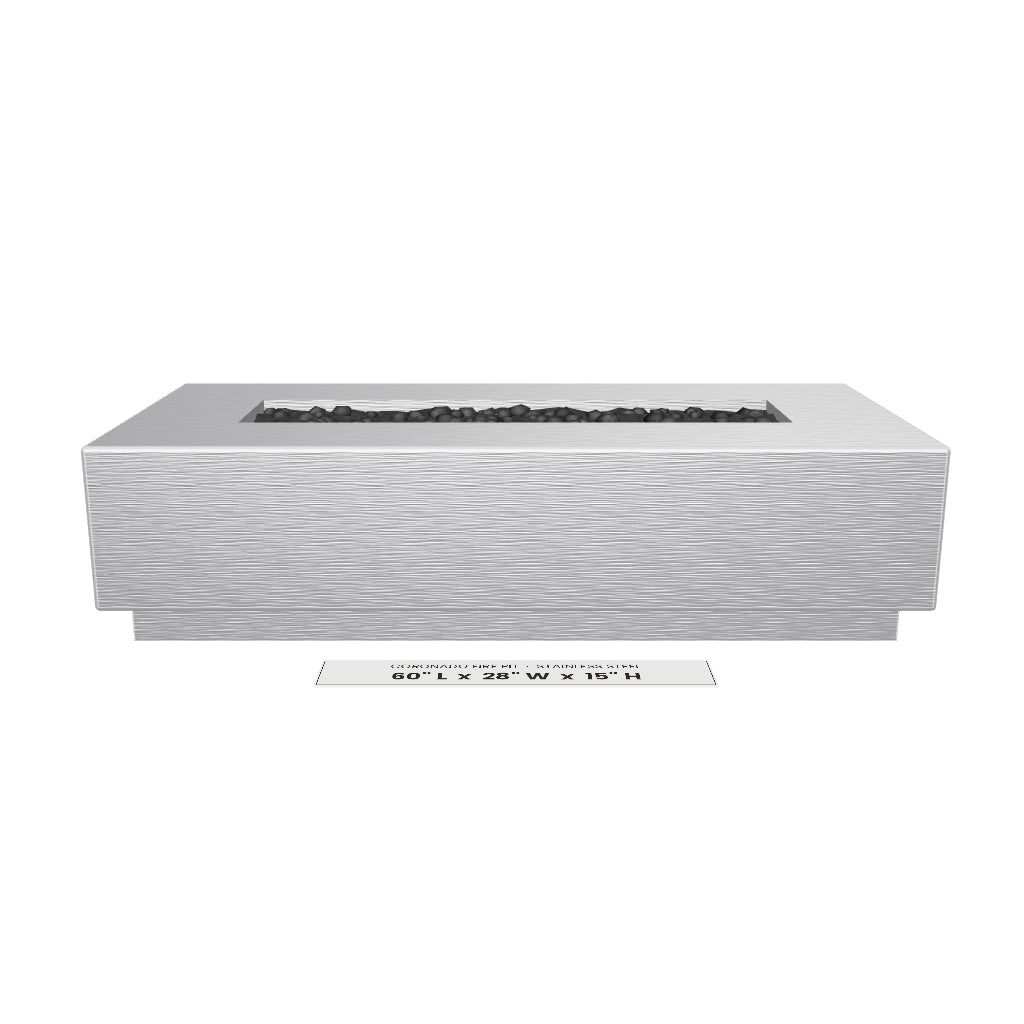
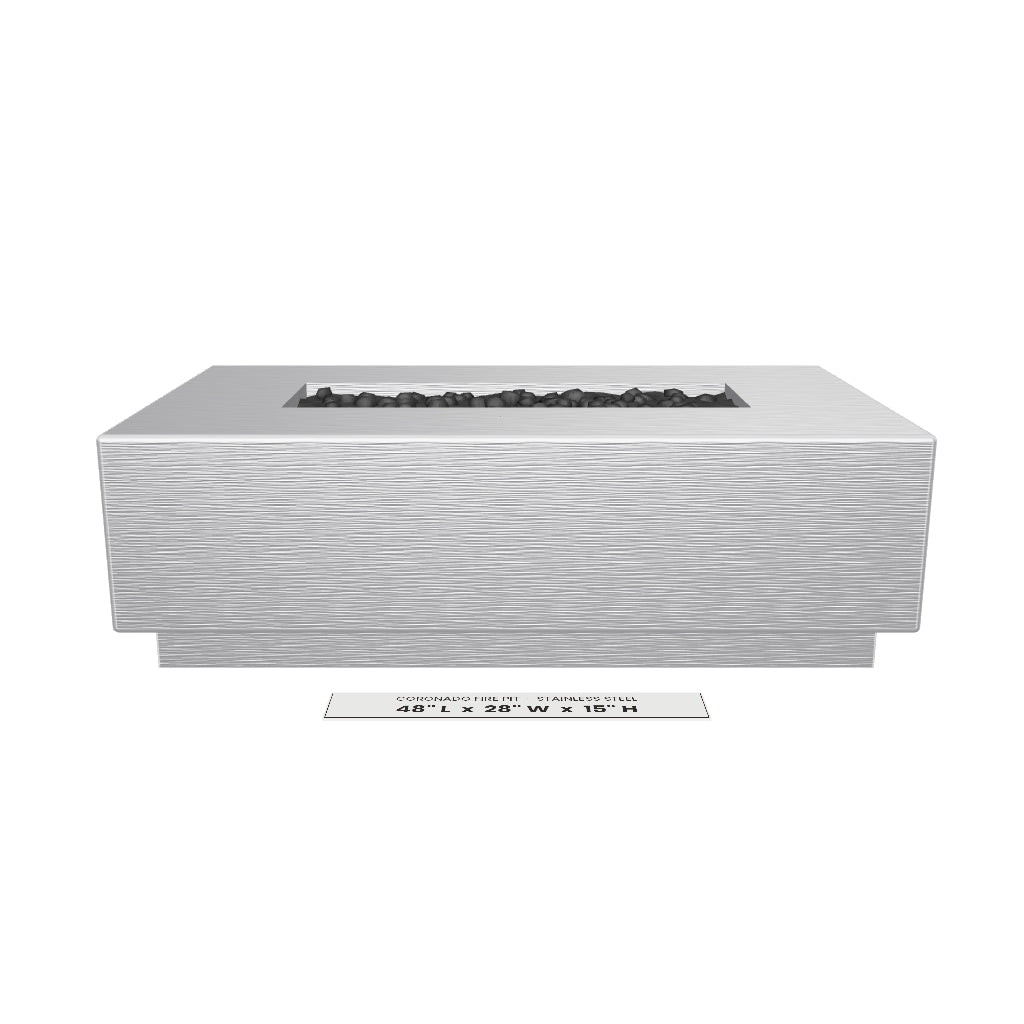
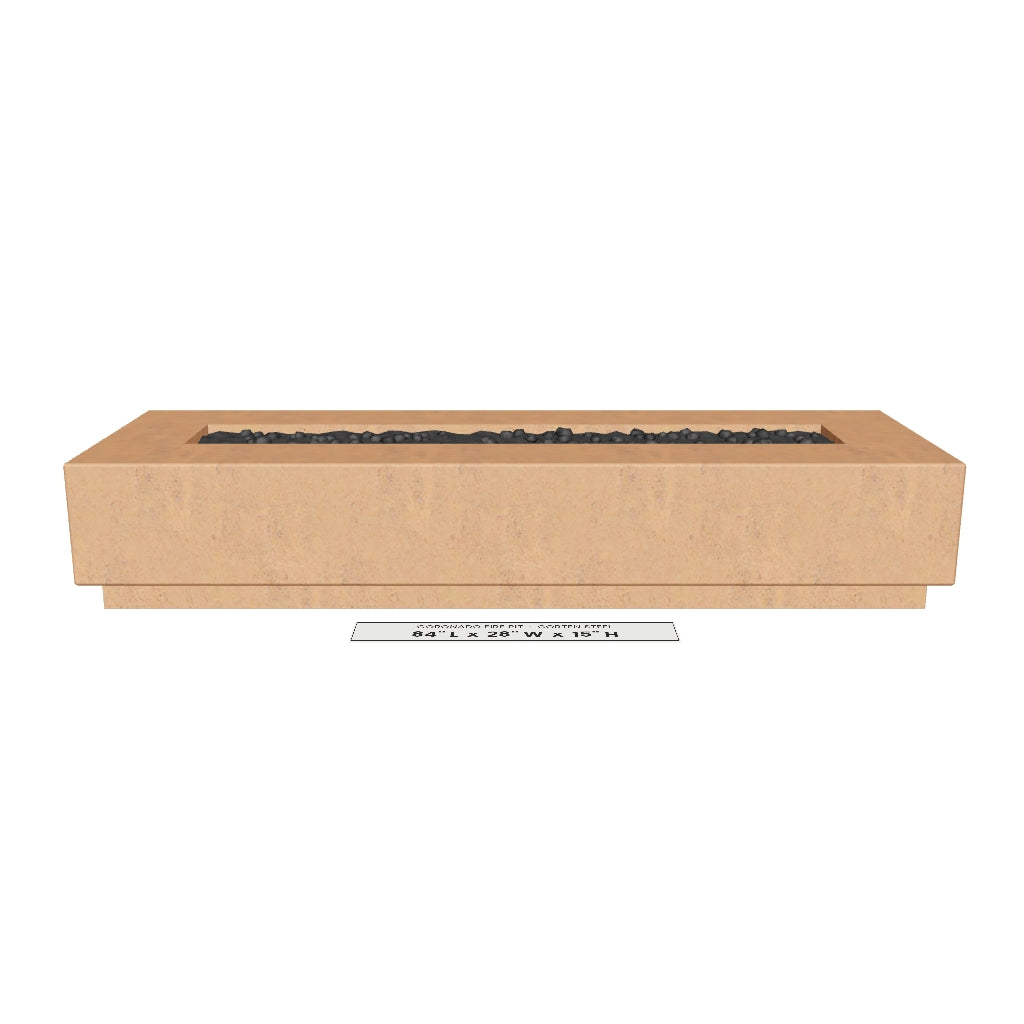
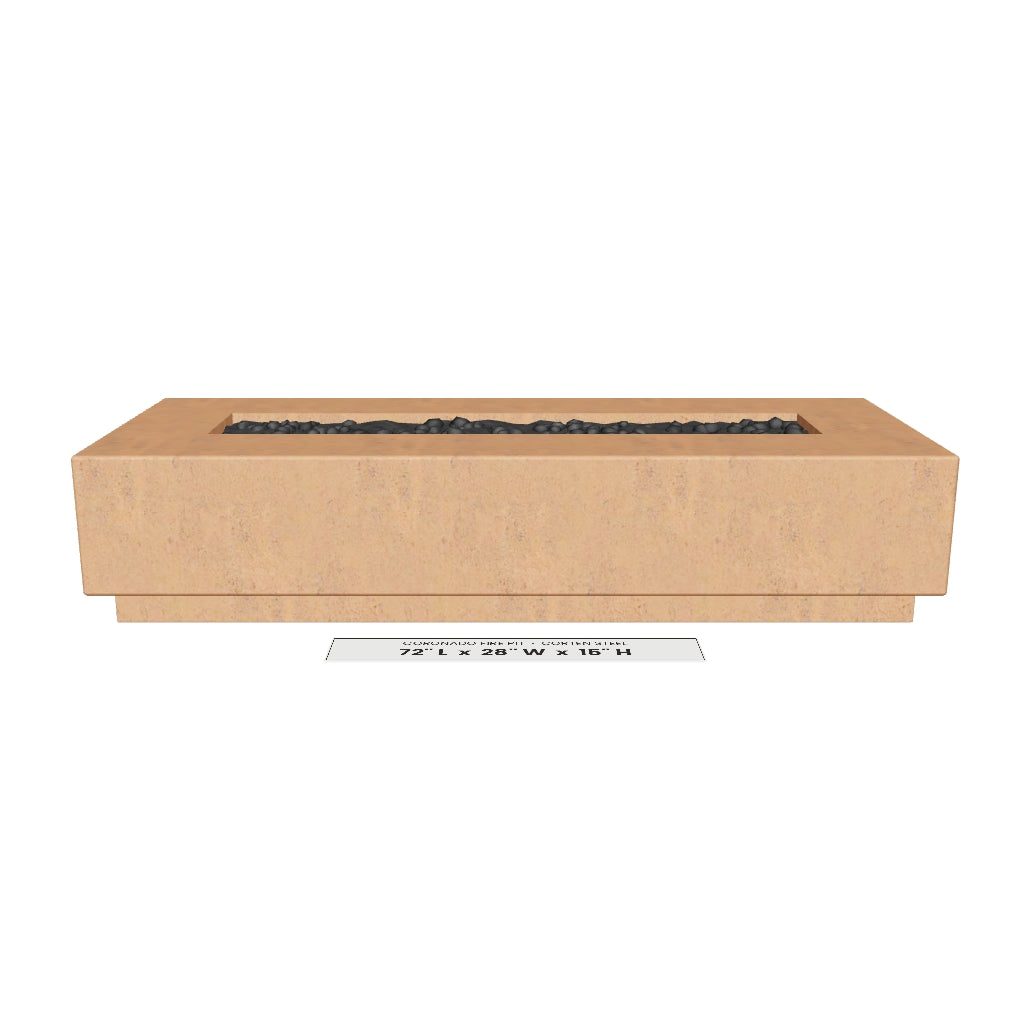
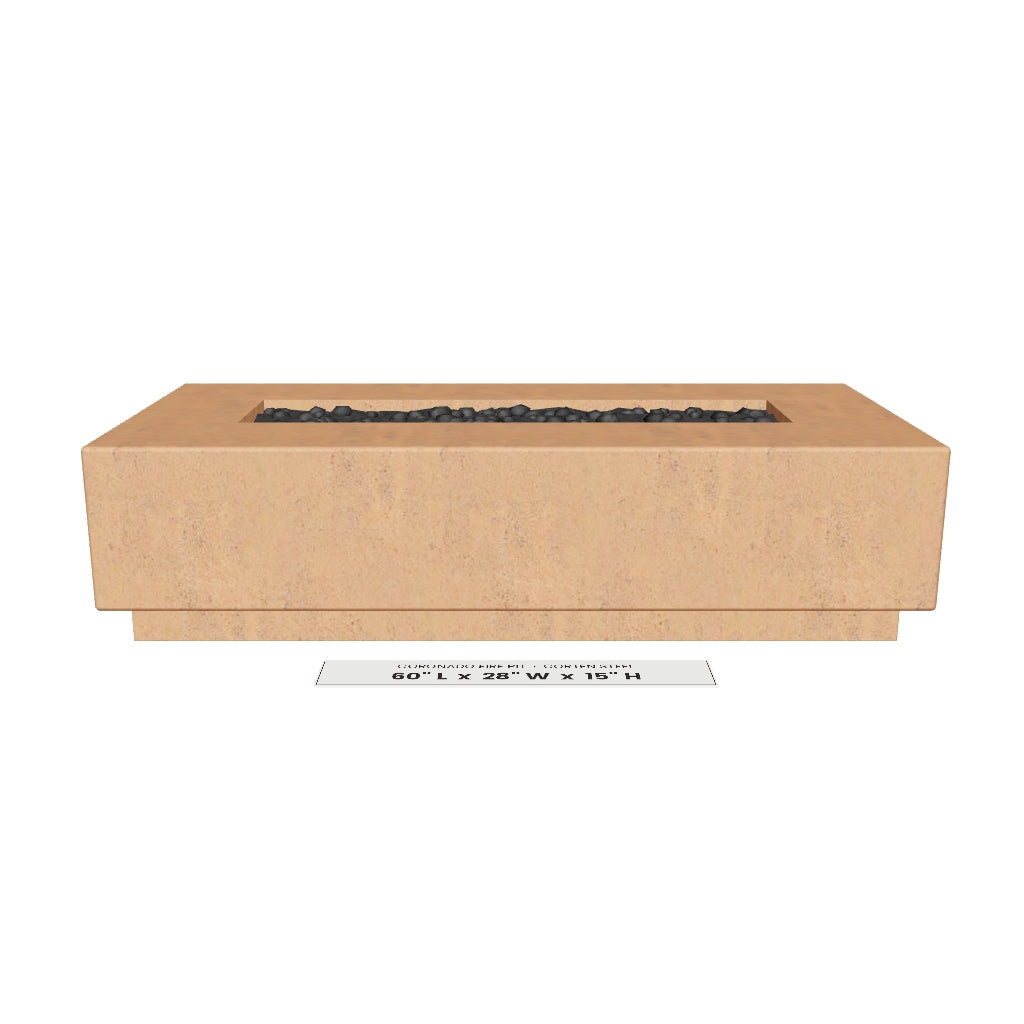
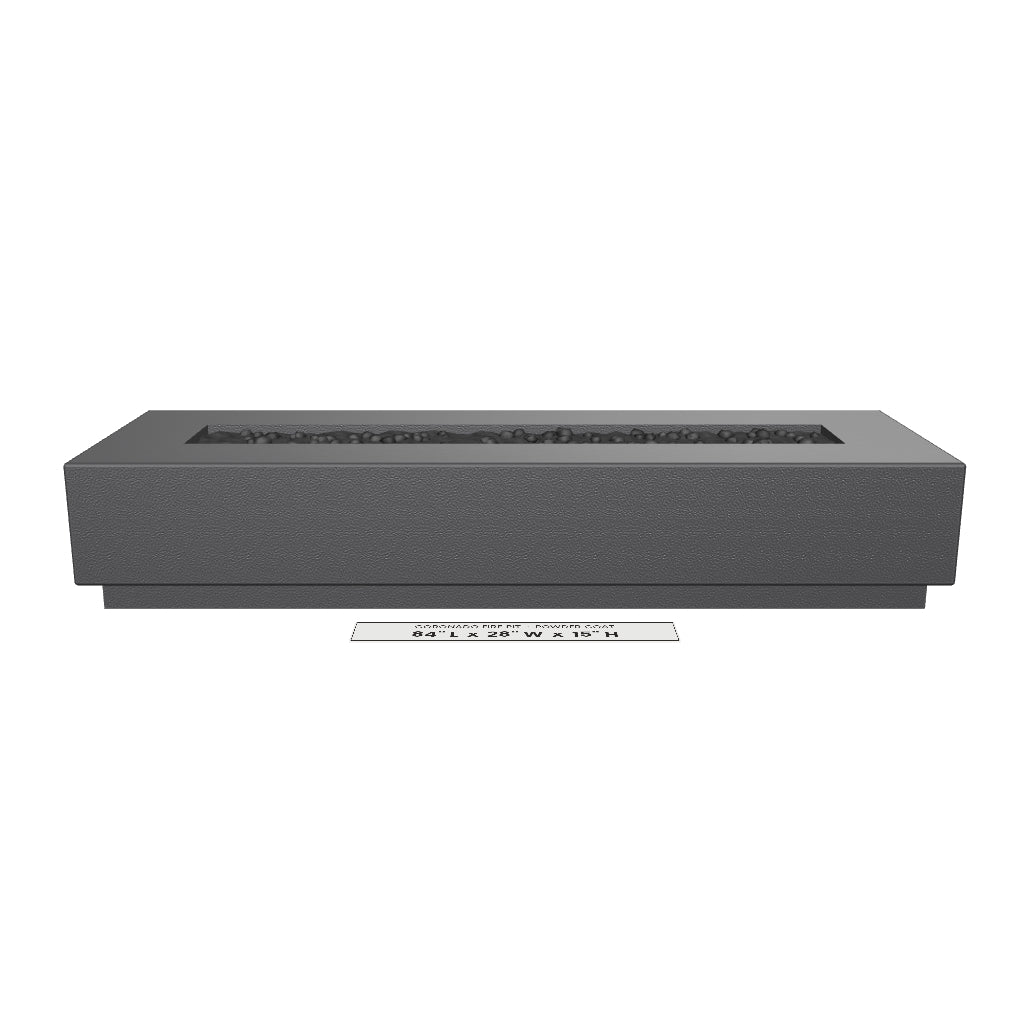
- The Outdoor Plus – rectangular and linear fire pits such as Coronado, Del Mar, Cabo Linear, Fremont, Carmen, Dixie, Eaves, La Jolla, Pismo, Regal, San Juan, Imperial and Billow, handcrafted in the USA and offered in powder coat, stainless steel, Corten steel, hammered copper, wood grain or concrete, depending on the series.
- Fire Pit Art – the Linear gas fire pit in 36", 48", 60" and 72" lengths, handcrafted in the USA from heavy-duty steel.
- LuxCraft – the Lumin Fire Pit 51 Rectangular.
Choosing the Right Length
Start with the seating. A rectangular fire pit should feel in proportion with the sofa or benches around it, so measure your furniture and the space between seating groups before choosing a length. Many designs are offered in several lengths, which makes it easy to match the fire pit to a sofa, a pool edge or a built-in bench. Leave room for legs and walkways along the long sides.
Height is the other choice. Lower fire pits suit lounge chairs and deep seating, while taller models sit comfortably with dining-height or standard patio chairs, and some taller designs can hide a propane tank in the base. Each product page lists the dimensions and burning area published by the manufacturer.
Materials and Finishes
Powder coat offers a wide palette of colors with a durable baked-on finish. Stainless steel gives a sleek, modern line. Corten steel develops a protective rust-colored patina that deepens over time. Hammered copper adds warmth and texture, wood grain finishes bring a natural look without wood maintenance, and concrete gives a solid, architectural presence. Choose a finish that ties in with your furniture, paving and the materials of your home.
Plan the Gas Supply First
Longer fire pits usually carry longer burners, and longer burners need more gas. The BTU rating listed on each product page tells you how much gas the burner needs to reach its full flame. Pipe diameter, the length of the run from the meter or tank, and the number of fittings all affect how much gas reaches the burner, and an undersized line is the most common reason a fire pit never reaches its full flame height. Share the BTU rating with your gas professional so they can confirm the line size before installation.
Choosing an Ignition System
Many fire pits in this collection are offered with a choice of ignition. Match lit systems are the simplest and need no electricity. Flame sense systems add a safety valve that shuts off the gas if the flame goes out, and spark ignition lets you light the fire with a push of a button. Electronic ignition lets you control the fire from a switch, timer or home automation system. On long fire pits, spark or electronic ignition makes lighting easier. The available options are listed on each product page.
Natural Gas or Propane
Choose the fuel before you order. Natural gas and liquid propane versions are built with different components and are not interchangeable. Natural gas suits permanent installations close to an existing gas line, while propane runs from a tank and works where there is no gas line. Our Natural Gas vs. Propane guide explains the differences in more detail.
Ventilation and Drainage
Any enclosed gas fire pit needs ventilation so gas cannot collect inside the base. Propane is heavier than air and settles low; natural gas is lighter than air and rises. Follow the vent requirements in the manufacturer's installation instructions and your local code. Rainwater also filters down through the fire media, so make sure the fire pit has a path for water to drain away from the burner and gas components.
Finishing With Fire Glass or Lava Rock
Fire media hides the burner, spreads the flame and gives the fire pit its finished look. A long run of fire glass makes a striking line of color along a linear fire pit, while lava rock gives a natural, rustic look. Cover the burner evenly at the depth recommended in the installation instructions. Shop our fire glass and lava rock, and protect your fire pit between uses with a fire pit cover.
Professional Installation
All gas fire features must be installed by a qualified, locally licensed gas professional, following the manufacturer's installation instructions and your local building codes. Keep the clearances to combustible materials listed in the instructions, and do not place a gas fire pit under an awning, pergola or other overhead structure.
Need Help Choosing?
Not sure which length, finish or ignition suits your space? Read our guide on how to choose a fire pit, or contact us with your space, fuel type and seating plan, and we'll help you narrow it down. Prefer a different shape? Browse our round, square and specialty shape gas fire pits.
Frequently Asked Questions
What's the difference between a rectangle and a linear fire pit?
Both are rectangular. "Linear" usually describes a longer, narrower fire pit with a long, slim flame, while a rectangle fire pit is wider in proportion. Check the dimensions and burning area on each product page.
Can I use natural gas and propane with the same fire pit?
No. Choose the fuel type when you order. Natural gas and propane versions use different components, and converting later should only be done with manufacturer-approved parts by a licensed gas professional.
Is fire glass included?
It depends on the manufacturer and the product. Each product page lists what's included. Fire glass and lava rock are also available separately in our store.
Can a rectangular fire pit hide a propane tank?
Some taller designs can store a propane tank in the base. Where the manufacturer confirms it, this is listed as "Stores LP Tank in Base" in the product's specifications.
Who should install my gas fire pit?
A qualified, locally licensed gas professional, following the manufacturer's installation instructions and your local building codes.
How long does shipping take?
Shipping is free. Many fire pits are made to order, so lead times vary by manufacturer. The estimated shipping time is shown on each product page.